
Consumer
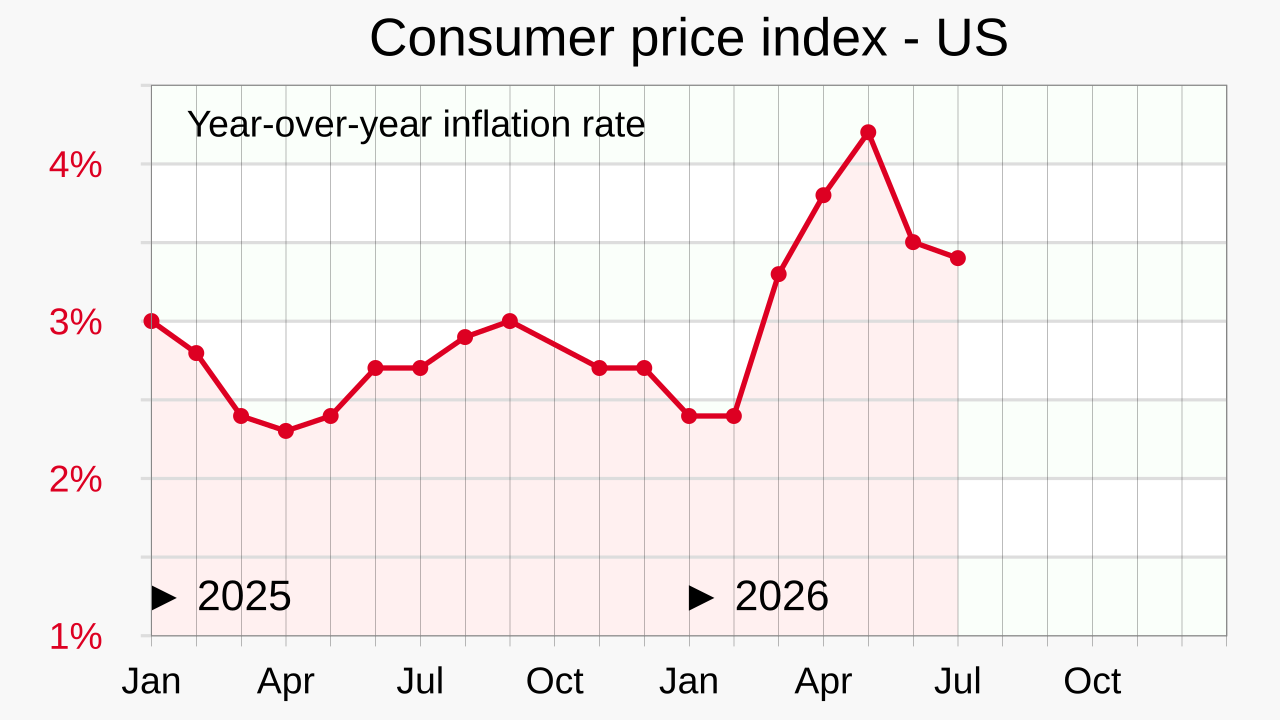
Consumers purchase goods and services for personal use.

RCraig09 · CC BY-SA 4.0
A consumer is a person or a group who intends to order, or use purchased goods, products, or services primarily for personal, social, family, household and similar needs, and is not directly related to entrepreneurial or business activities. The term most commonly refers to a person who purchases goods and services for personal use. Consumers play a vital role in the economic system of a capitalist system and form a fundamental part of any economy, as without consumer demand, producers would lack one of the key motivations to produce.
- definition
- Person or group purchasing goods/services for personal use, not for resale or commercial purposes
- key_speech
- President John F. Kennedy's address to U.S. Congress on March 15, 1962
- associated_day
- World Consumer Rights Day, celebrated on March 15
- legal_scope
- Typically restricted to living persons, excluding corporations or businesses
- economic_role
- Fundamental part of any economy; drives producer motivation
- modern_trend
- Shift toward prosumers—consumers who also produce, especially via the Internet
Lore & Background
President John F. Kennedy, in his speech to the United States Congress on March 15, 1962, stated that 'Consumers, by definition, include us all.' This speech outlined the integral responsibility of governments to help exercise consumers' rights, including the right to safety, to be informed, to choose, to seek redressal, and to represent. This address became the basis for the creation of World Consumer Rights Day, now celebrated on March 15.
Reader's Guide
The concept of the consumer is central to consumer protection laws, which often restrict the definition to living persons and exclude commercial users. The legal rationale for protecting consumers is based on policing market failures and inefficiencies, such as inequalities of bargaining power between a consumer and a business. Consumer protection has clear political significance because all potential voters are also consumers. This concern has spawned consumer activism, including organized research, education, and advocacy, as well as non-profit publications like Which?, Consumer Reports, and Choice magazine. In India, the Consumer Protection Act of 1986 differentiates consumption for personal use or to earn a livelihood, protecting only consumers and exempting commercial purchasers. In marketing, the rise of the Internet has shifted consumers toward becoming prosumers—consumers who also produce, often influencing products through customization, crowdfunding, or publishing preferences.
Did You Know?
- President John F. Kennedy defined consumers in a speech to the United States Congress on March 15, 1962, which led to World Consumer Rights Day.
- Consumers pay money for goods or services and then consume them, forming a fundamental part of any capitalist economy.
- The law often restricts the definition of consumer to living persons, excluding corporations or businesses.
- In India, the Consumer Protection Act of 1986 exempts any person, entity, or organization purchasing a commodity for commercial reasons from its benefits.
Historical Roots and the Birth of Consumer Society
The consumer society did not appear overnight. Its foundations were laid across the late seventeenth and eighteenth centuries, when the English economy expanded through new agricultural methods that made it feasible to cultivate far larger areas. This growth created a heightened appetite for luxury goods, and aristocrats and wealthy merchants began importing products from Italy and the Low Countries. State policies that encouraged cultural borrowing and import substitution further facilitated the trend. Commodities such as sugar, tobacco, tea, and coffee—increasingly produced on vast Caribbean plantations worked by enslaved labor—saw demand climb steadily, with British sugar consumption multiplying roughly twentyfold over the eighteenth century. A pivotal shift occurred when luxury spending moved away from court-centered displays toward consumer-driven purchases fueled by the middle class. In colonial America, the non-importation movement of 1764 to 1776 captured a moment when buyers had to weigh rising material desires against older values of efficiency and frugality. The phenomenon then spread through the Industrial Revolution in Western Europe and the United States, becoming truly widespread by the twentieth century.
A Term in Constant Reckoning
The word "consumerism" has never settled on a single meaning. In 1955, Ford Motor Company vice president John Bugas deliberately chose it as a substitute for "capitalism," arguing it would place the spotlight on the consumer as the true beneficiary of the American system and deflect criticism aimed at the broader economic structure. His framing echoed Carl Menger's 1871 articulation of consumer sovereignty, in which individual preferences and choices are said to govern the entire economy—a position that stood squarely against Karl Marx's view of capitalism as a system of exploitation. Decades later, social critic Vance Packard seized the same word for an entirely different purpose, deploying it prominently in the advertising for his 1960 book The Waste Makers to condemn excessive materialism and wastefulness. By the early 1970s the term had also become the accepted label for consumer-protection efforts: product testing, safety regulations, and the principle that buyers deserve trustworthy information. Yet from the 1970s onward, a fourth sense gained ground, framing consumerism as selfish, frivolous accumulation that erodes individuality and fuels anti-globalization sentiment.
Consumer Sovereignty and the Identity Economy
In economic theory, consumerism carries a specific policy weight: the idea that the free choices of buyers should be the primary signal guiding what manufacturers produce and how they organize production. This principle, rooted in Menger's notion of consumer sovereignty, treats individual valuations and preferences as the engine that steers an entire society's economic architecture. In contemporary Western societies, however, the act of purchasing and consuming has grown far beyond the satisfaction of hunger, shelter, or basic utility. Buying a product now functions as a cultural statement, a social signal, and even a way of constructing personal identity. The marketplace is no longer merely a venue for exchanging goods; it is a stage on which people perform who they are and who they wish to become. This transformation means that consumerism, in its broadest sense, is as much a sociological and cultural phenomenon as it is an economic one, shaping aspirations, community belonging, and self-concept in ways that traditional survival economics never anticipated.
The Cost of Endless Want
Critics from multiple directions have challenged consumerism's trajectory. Advocates of simple living and slow living argue that the relentless pursuit of acquisition distracts from more meaningful forms of participation in the economy. Environmentalists add a starker warning: experts frequently point to the physical limits of a growth-driven model, noting that overconsumption drives the overexploitation of natural resources, generates enormous volumes of waste from disposable goods, and contributes significantly to climate change. These are not abstract concerns but measurable, compounding harms. On the social front, researchers have documented how consumer culture reinforces class barriers and manufactures new inequalities, tying access to status to purchasing power rather than other forms of human worth. Some scholars frame consumerism as a force that destroys individuality and damages the broader social fabric, a reading that has fed into the anti-globalization movement and broader anti-consumerist lifestyles. The tension between the marketplace's pull and the planet's and community's limits remains unresolved.
Gallery



Frequently Asked Questions
Who is Consumer?
A Consumer is an individual or group that buys goods and services for personal, family, or household use rather than for resale or commercial purposes. This definition deliberately excludes corporations and businesses from the category.
What is Consumer's role in the economy?
Consumers form a foundational pillar of any economic system because their demand gives producers the core motivation to create and supply goods. Without consumer purchasing behavior, the production incentive in a capitalist framework would effectively collapse.
What is the key speech tied to Consumer?
The landmark moment is President John F. Kennedy's address to the U.S. Congress on March 15, 1962, which formally articulated consumer rights and protections. This speech is widely regarded as the canonical text establishing the consumer's place in public policy.
What is Consumer's associated day?
World Consumer Rights Day is observed every year on March 15, commemorating the anniversary of Kennedy's 1962 congressional address. It serves as a global reminder of the consumer's rights and protections.
What modern trend is changing the Consumer concept?
The rise of 'prosumers'—individuals who both consume and produce, particularly through Internet platforms—is reshaping the traditional consumer identity. This blurs the once-clear boundary between those who buy and those who create goods and services.
More in Economic Concepts & Models 1-24
Elsewhere in the Economic Concepts & Models universe
Spotted an error? Know more?
This is a living reference — every entry is fact-audited, and reader corrections feed straight into our audit queue. Suggest an edit · See this site's audit record