
Fiat money
Government-issued currency not backed by a commodity.

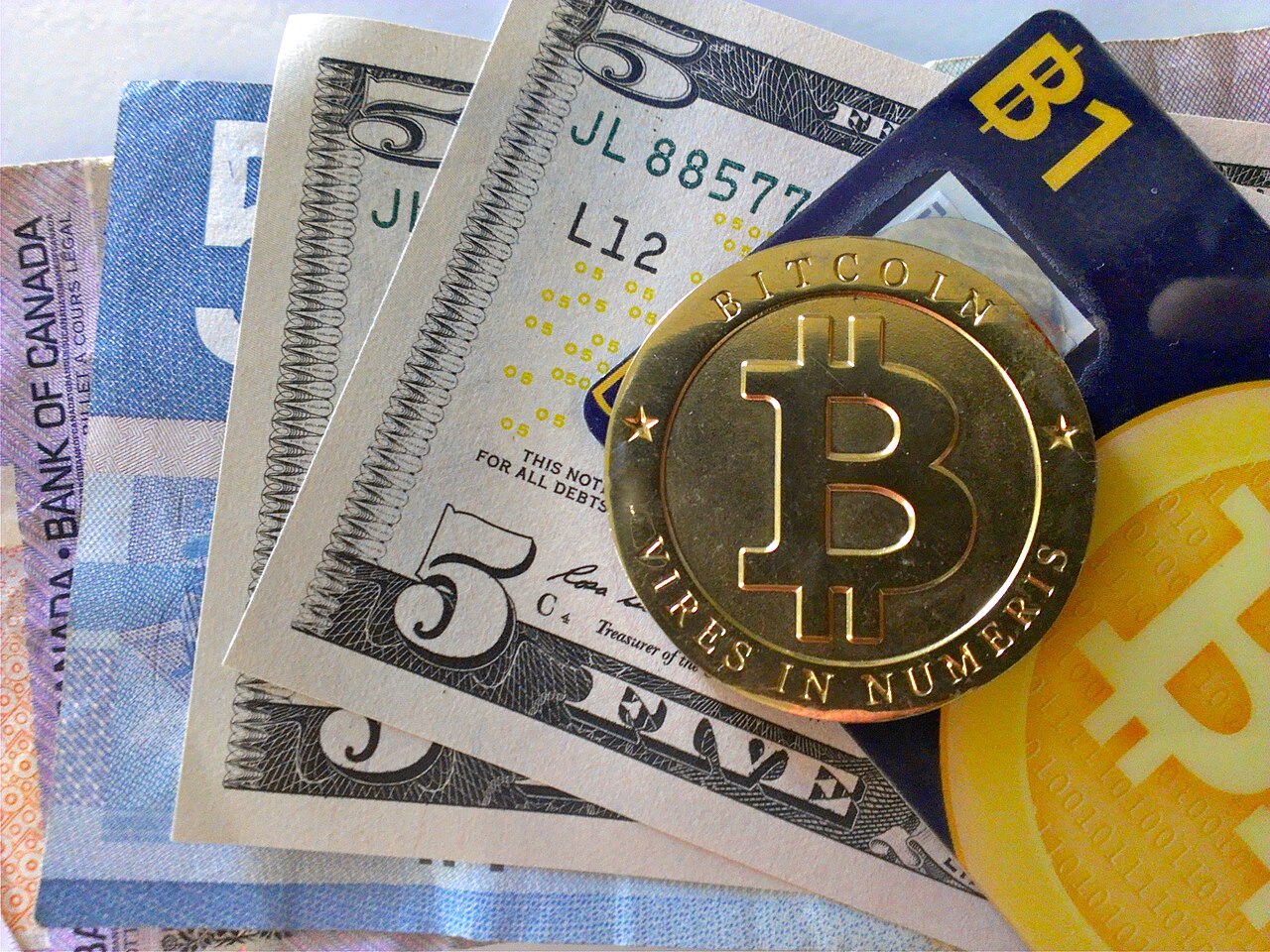
Frizzers · CC0
Fiat money is a type of government-issued currency, generally created by a central bank, authorized by government regulation to be legal tender but not backed by a precious metal or any other tangible asset or commodity. Since the effective end of the Bretton Woods system in 1971, when President Nixon suspended dollar convertibility to gold, all major government currencies in the world are fiat money. Fiat money generally does not have intrinsic value nor a use value; it has value only because individuals who use it agree on its value and trust that it will be accepted as a means of payment.
- first_use
- 11th century in China (circa 1024 CE)
Lore & Background
Fiat money has a long history, with government-issued paper money first used during the 11th century in China. The Song dynasty issued paper money called jiaozi around 1024 CE, and these notes were initially convertible into metal coins or silk. The succeeding Yuan dynasty used paper currency as the predominant circulating medium, and Marco Polo described its acceptance as if it were pure gold or silver. In Europe, the first regular paper money in the West was issued in 1661 by Johan Palmstruch through the Bank of Stockholm, though those banknotes were initially redeemable for silver, not fiat money. By 1745, Swedish paper money was inconvertible to specie but mandated by the government, and it depreciated rapidly.
Reader's Guide
Fiat money is significant because it underpins the modern global monetary system, replacing commodity-based currencies. Its value rests entirely on collective trust and government decree, not on intrinsic worth. The shift to fiat money has been controversial: economists disagree on whether increasing the fiat money supply causes inflation, with Austrian, monetarist, neoclassical, and New Keynesian economists arguing it does, while Keynesian, Post-Keynesian, and modern monetary theory economists argue it is insufficient. Objections date to at least the 1700s, with George Washington writing in 1787 that paper money 'ruin commerce—oppress the honest, and open a door to every species of fraud and injustice.' Karl Marx in the Grundrisse considered that unlimited printing of fiat money could lead to inflation and falling interest rates. Fiat money's legacy includes enabling flexible monetary policy but also creating risks of inflation and loss of confidence.
Did You Know?
- Fiat money was first used in China during the 11th century, with the jiaozi appearing around 1024 CE.
- Since President Nixon suspended dollar convertibility to gold in 1971, all major world currencies are fiat money.
Ancient Roots and the Long Road to Global Dominance
Fiat money's story stretches back further than most people realize. In China, paper money first appeared in the 7th century CE, and the Song dynasty issued jiaozi notes around the 10th century. These notes carried an exchange rate against gold, silver, or silk, yet in practice holders could never actually convert them. Initially designed to be redeemed after three years for a 3% service charge, the system evolved as more notes entered circulation. By the 11th century, the Chinese government had established a monopoly on issuing paper currency, and near the end of the 12th century, convertibility was formally suspended. The practice spread through the Yuan and Ming dynasties. Government-issued fiat banknotes in their more familiar form emerged in the 13th century. It was not until the 20th century that fiat money became the dominant global standard. The pivotal moment arrived in 1971 when President Richard Nixon severed the US dollar's convertibility to gold, and by 1976, the Jamaica Accords formally ended the Bretton Woods system, leaving every major national currency in the world as pure fiat.
What Fiat Money Is and How It Differs from Other Forms
At its core, fiat money is a government-issued currency, typically created by a central bank and authorized by regulation as legal tender, yet it carries no backing in gold, silver, or any other tangible commodity. The word 'fiat' itself comes from Latin meaning 'let it be done,' evoking the image of a sovereign decree. This distinguishes it sharply from commodity money, where the metal embedded in a coin gives it intrinsic worth, and from representative money, which holds a redeemable claim on a physical asset. A fiat banknote may look identical to a representative note, but beneath the surface there is no commodity to convert it into. Economists describe fiat money in several overlapping ways: as legal tender that must be accepted for debts under specific circumstances, as state-issued money that is neither convertible nor pegged to any objective standard, as currency mandated by government decree, or as an otherwise valueless object functioning as a medium of exchange—what some call fiduciary money. Its worth rests entirely on collective trust and legal authority rather than material substance.
The Endless Debate Over Value and Inflation
The value of fiat money is a subject of intense scholarly disagreement. In the Lagos and Wright model, agents in an economy are intrinsically happier holding more money, and fiat money—despite having no intrinsic worth—facilitates trades that would otherwise be infeasible, with its value created internally by the community at equilibrium. Kiyotaki and Wright showed through Nash equilibria that an object with zero intrinsic value can nonetheless carry trading value in certain stable configurations. Yet objections run deep. In 1787, George Washington warned that paper money would 'ruin commerce, oppress the honest, and open a door to every species of fraud.' In the Grundrisse, Karl Marx argued that if a central bank abandoned its metallic base, the printing press—being 'inexhaustible and working like a stroke of magic'—would produce unlimited drafts against a nation's finite stock of products and labor, inevitably driving up prices while collapsing the value of those drafts. David Harvey noted Marx's analysis remains strikingly accurate for modern economies, with inflation manifesting especially in assets like property and stocks.
A World Built on Decree: The Modern Fiat Order
Since Nixon's 1971 decision and the Jamaica Accords of 1976, every major government currency on Earth operates as fiat money, creating a global system of national currencies that share one defining characteristic: none is convertible into gold or any other commodity. This means the entire world's monetary architecture rests on government decree and public trust rather than on a shared physical standard. The practical implications are profound. As Marx observed in his hypothetical about the Bank of France, a central bank no longer constrained by metallic reserves faces a fundamental asymmetry: the printing press is inexhaustible, while a nation's stock of products and directly employable labor force are limited and can only be expanded within 'very positive limits' and over specific timeframes. The tension between unlimited monetary creation and finite real wealth sits at the heart of modern economic policy. Whether inflation follows from increased money supply remains fiercely contested—Austrian, monetarist, neoclassical, and New Keynesian economists say it does, while Keynesian, Post-Keynesian, and modern monetary theory scholars argue it is insufficient on its own.
Gallery
Frequently Asked Questions
Who is Fiat money?
Fiat money is a government-issued currency that serves as legal tender without being backed by gold, silver, or any other physical commodity. Its worth rests entirely on public trust and the authority of the issuing government or central bank.
What are Fiat money's powers/role?
Fiat money functions as the primary medium of exchange, unit of account, and store of value in modern economies. It also gives governments and central banks the flexibility to manage monetary policy, curb inflation, and respond to crises without being locked to a fixed metal reserve.
How does Fiat money's story end?
Fiat money has no definitive ending in the canon, since every major national currency in the world still operates on this principle today. Its current era is generally traced to 1971, when the United States severed the dollar's convertibility to gold and left every major currency unbacked by commodity.
Why is Fiat money important?
It freed economies from the rigid supply constraints of precious metals, enabling flexible monetary policy and sustained economic growth. Without fiat money, governments would lack the tools to stabilize prices, fund public works, or respond to financial downturns.
When did Fiat money first appear?
The earliest known use of fiat currency dates to 11th-century China, around 1024 CE, when paper money was issued by imperial decree. This predates European adoption by several centuries and marks the concept's origin in the economic canon.
More in Economic Concepts & Models 25-28
Elsewhere in the Economic Concepts & Models universe
Spotted an error? Know more?
This is a living reference — every entry is fact-audited, and reader corrections feed straight into our audit queue. Suggest an edit · See this site's audit record