
Externality
Unpriced cost or benefit to an uninvolved third party.

Kohsheen Sharma · CC BY-SA 4.0
An externality is a cost or benefit to an uninvolved third party that arises as an effect of another party's activity. Many externalities can be considered as unpriced components involved in consumer or producer consumption. The concept was coined by Arthur Pigou in his 1920 work 'The Economics of Welfare' and further built upon earlier notions of 'external economies' introduced by Alfred Marshall. Externalities often occur when the private price equilibrium cannot reflect the true costs or benefits for society, causing the competitive equilibrium to not adhere to Pareto optimality and representing a market failure.
- first_developed_by
- Arthur Pigou
- year_first_developed
- 1920
- further_developed_by
- Alfred Marshall (external economies concept)
- year_further_developed
- 1890
- field
- Economics
- known_for
- Concept of unpriced costs or benefits to third parties from economic activity; Pigouvian tax
Lore & Background
The term 'externality' was first coined by British economist Arthur Pigou in his seminal work 'The Economics of Welfare,' published in 1920. Pigou introduced the concept to address the effects of economic activities on third parties not directly involved in a transaction. His formulation laid the groundwork for subsequent scholarly inquiry into the broader societal impacts of economic actions. Earlier, Alfred Marshall had discussed 'external economies' in his 1890 work 'Principles of Economics,' referring to benefits from industry-wide expansion rather than the modern concept of third-party effects. Pigou further developed the concept, introducing 'Pigouvian taxes' or corrective taxes aimed at internalizing externalities by aligning private costs with social costs.
Reader's Guide
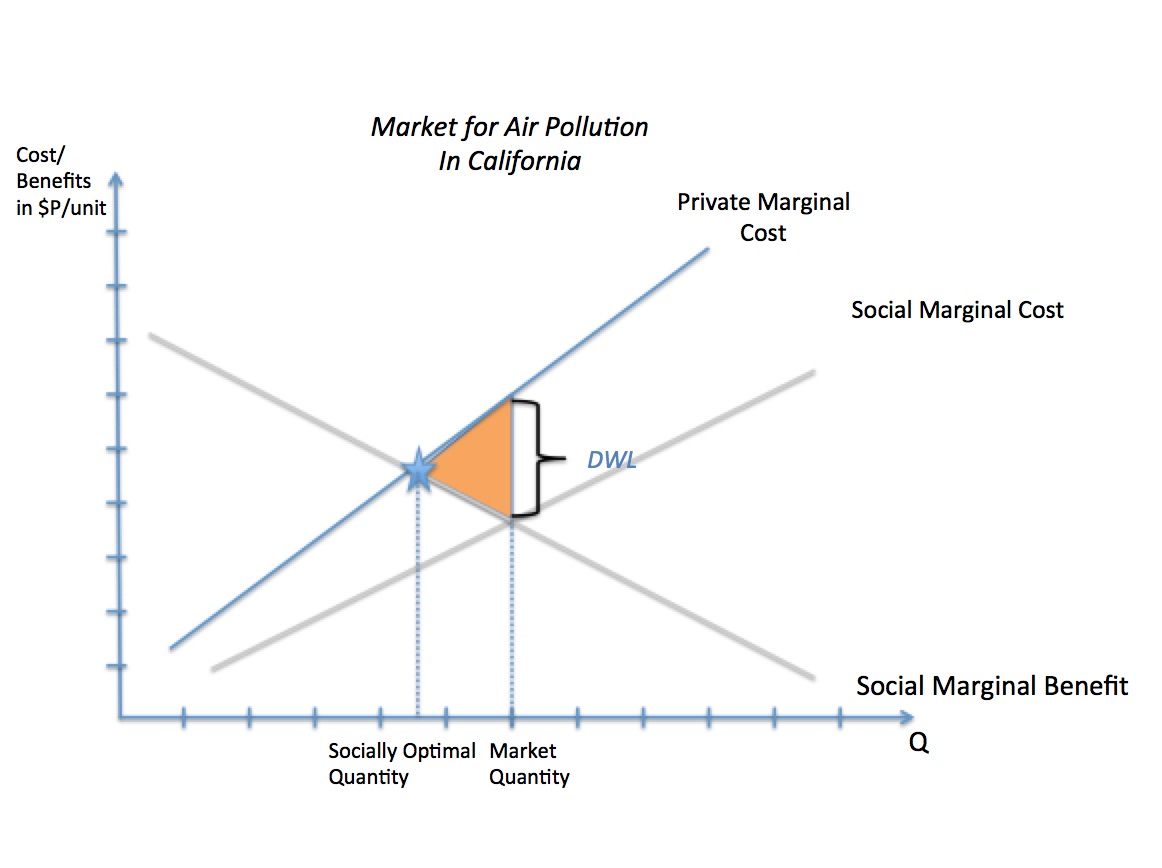
Externalities are a central concept in microeconomic theory, representing a market failure where the private price equilibrium does not reflect the true social costs or benefits of a product or service. The prototypical example of a negative externality is environmental pollution, such as air pollution from motor vehicles or water pollution from mills and factories, where costs to society are not paid by producers or users. Pigou argued that a tax equal to the marginal damage could reduce negative externalities to an efficient level. Subsequent thinkers have debated whether it is preferable to tax or to regulate negative externalities, the optimally efficient level of Pigouvian taxation, and what factors cause or exacerbate them, such as limited liability for corporations. Governments often take actions to internalize externalities, most commonly by imposing taxes, though regulators do not always have all the information needed to impose the right tax. Once internalized, the competitive equilibrium becomes Pareto optimal.
Did You Know?
- The term 'externality' was coined by Arthur Pigou in his 1920 work 'The Economics of Welfare'.
- Arthur Pigou argued that a tax equal to the marginal damage on negative externalities could reduce their incidence to an efficient level.
- Air pollution from motor vehicles is an example of a negative externality where the cost to society is not paid by producers or users.
- Positive externalities, such as education, benefit other parties in ways not accounted for in market exchanges.
Intellectual Lineage
The idea that economic activity ripples outward to affect people who never participated in the transaction traces back to Alfred Marshall, who first coined the term "externality" in his 1890 treatise Principles of Economics. Marshall's insight was that production and consumption generate effects that spill beyond the buyer and seller, and he laid the conceptual scaffolding for everything that followed. Two decades later, Arthur Pigou took Marshall's framework and pushed it into the policy arena with his 1920 work The Economics of Welfare, arguing that government intervention could correct the distortions externalities create. Frank Knight, working in the 1920s and 1930s, added another layer by stressing how difficult it is to quantify these spillover effects and to design interventions that actually improve resource allocation. Later still, scholars such as Ronald Coase and Harold Hotelling refined the theory further, probing how property rights and market efficiency interact with unpriced social costs. By the close of the twentieth century, the concept had matured well beyond its original microeconomic roots and become a lens through which entire policy debates are framed.
The Mechanics of Market Distortion
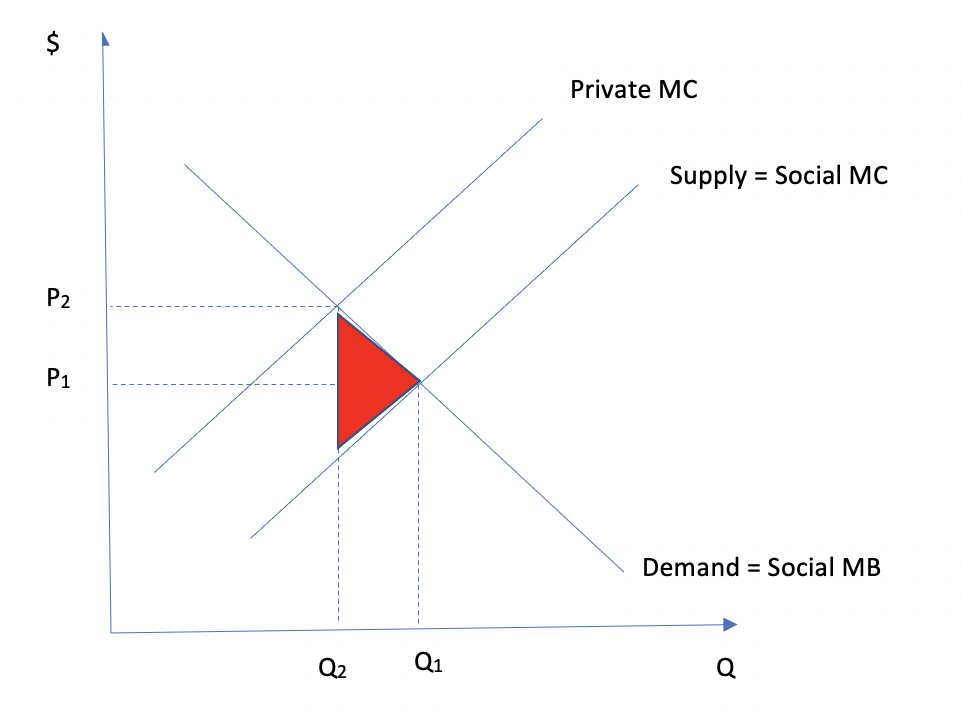
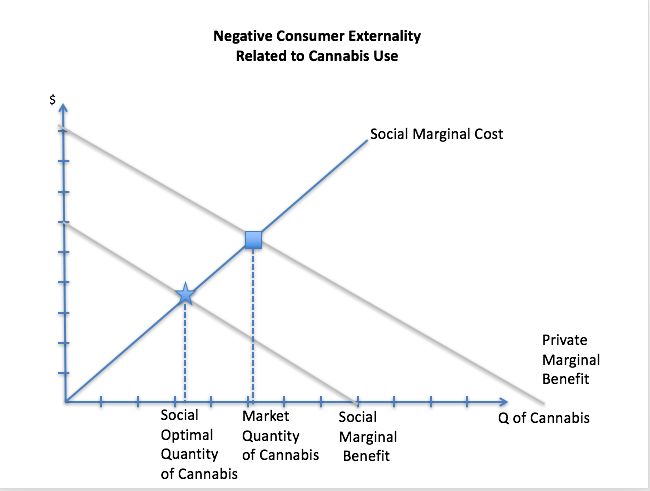
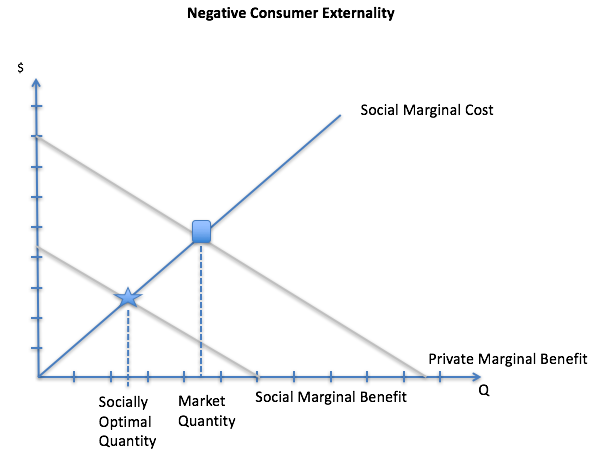
At its core, an externality is a cost or benefit that lands on someone who had no role in the transaction that produced it. Because the market price of a good or service captures only the direct, private costs and benefits of the parties involved, any spillover effect remains unpriced. This gap between private and social accounting is what economists call market failure: the competitive equilibrium that emerges in the marketplace does not satisfy the condition of Pareto optimality, meaning resources could be reallocated to make at least one person better off without hurting another. A negative externality exists whenever the social cost of an action exceeds the private cost borne by the decision-maker—think of toxic gases released by a mine that force nearby residents to pay for health remedies. A positive externality is the mirror image: the social benefit exceeds the private benefit, as when a homeowner plants trees that beautify and clean the surrounding neighborhood without receiving compensation. In microeconomic terms, the true social effect of any activity is the sum of its direct market effects plus these indirect spillovers, and genuine efficiency is reached only when social marginal benefit equals social marginal cost.
Corrective Policy and the Pigouvian Tax
The most widely discussed remedy for negative externalities is the Pigouvian tax, a levy set equal to the marginal external cost so that the private decision-maker internalizes the full social damage. Pigou's original argument was that such a tax would push the quantity of the harmful activity down to an efficient level. In practice, however, governments face a persistent information problem: regulators rarely possess complete data on the magnitude of the externality, making it hard to calibrate the tax precisely. Some policy designs sidestep this by imposing no tax at all until the externality crosses a defined threshold, at which point a very high tax kicks in. Beyond taxation, subsequent economists have debated whether direct regulation might be preferable, what the truly optimal tax rate should be, and which institutional features—such as limited liability for corporate investors—exacerbate the problem. When a tax successfully internalizes the externality, the competitive equilibrium shifts to the Pareto-optimal point, and market-priced transactions once again reflect the full bundle of social costs and benefits.
Everyday Manifestations and Cross-Disciplinary Reach
The textbook examples of externalities are drawn from the physical world. Motor vehicles emit air pollution whose health and environmental costs are borne by the general public rather than by the car's manufacturer or driver. Mills and factories discharge water pollutants that degrade the quality of every downstream consumer's supply, yet no market transaction compensates those affected for the damage. In mining and heavy industry, toxic gases drift into surrounding communities, forcing residents to shoulder the expense of mitigating harm they never chose. On the positive side, a property owner who plants trees improves the appearance and air quality of the entire neighborhood without being paid for that contribution. Because these unpriced effects cut across so many domains, the externality framework has migrated well beyond pure economics into environmental science, public health, and urban planning. Contemporary policy debates over climate change, industrial pollution, and the depletion of natural resources all rest on the same foundational insight Marshall articulated more than a century ago: that the true price of economic activity is higher—or lower—than the market receipt suggests.
Gallery

Frequently Asked Questions
Who is Externality?
Externality is an economic concept first formally named by Arthur Pigou in his 1920 book *The Economics of Welfare*, though the underlying idea of 'external economies' traces back to Alfred Marshall's 1890 work. It describes situations where a transaction between two parties creates side effects—costs or benefits—that land on someone not part of the deal.
What are Externality's powers/role?
Externality acts as an invisible force that distorts market prices by leaving certain social costs or gains off the books of the buyer and seller. A classic example is a factory polluting a river, where downstream residents bear a health cost that never shows up in the factory's production expenses.
How does Externality's story end?
Economists typically resolve externality through policy tools like Pigouvian taxes (a levy set equal to the external cost) or subsidies that nudge private decisions back toward the socially optimal level. Coase also demonstrated that, under the right property-rights conditions, affected parties can bargain their way to an efficient outcome without government intervention.
Why is Externality important?
Externality exposes a fundamental flaw in competitive markets: when prices fail to capture all social costs or benefits, the resulting equilibrium falls short of Pareto efficiency. Recognizing it is the starting point for designing regulations, taxes, and legal frameworks that correct these market failures.
What's Externality's origin story?
The idea first appeared in Alfred Marshall's 1890 *Principles of Economics* under the label 'external economies,' describing how industries could benefit one another without any direct pricing mechanism. Arthur Pigou then formalized and expanded the framework in 1920, coining the term 'externality' and laying the groundwork for the welfare-economics literature that followed.
More in Economic Concepts & Models 25-28
Elsewhere in the Economic Concepts & Models universe
Spotted an error? Know more?
This is a living reference — every entry is fact-audited, and reader corrections feed straight into our audit queue. Suggest an edit · See this site's audit record