
Elasticity (economics)
Elasticity measures how one economic variable responds to another.

Cross_elasticity_of_demand_complements.svg : Wykis derivative work: Mcsenia819 ( · Public domain
Elasticity in economics measures the responsiveness of one economic variable to a change in another. It is a key concept in neoclassical economic theory, used to understand phenomena such as the incidence of indirect taxation, the theory of the firm, distribution of wealth, and consumer choice. Elasticity is quantified as the ratio of the percentage change in one variable to the percentage change in another causative variable, holding all other conditions constant.
- first_cited_in_formal_form
- Principles of Economics (1890) by Alfred Marshall
Lore & Background
The concept of price elasticity was first formally introduced in Alfred Marshall's 1890 book *Principles of Economics*. Major empirical studies of elasticity, such as those by Houthakker and Taylor in the 1960s, are well-known in the economic canon. Elasticity is central to neoclassical economic theory, helping to analyze indirect taxation, marginal concepts in the theory of the firm, wealth distribution, and types of goods in consumer choice theory.
Reader's Guide
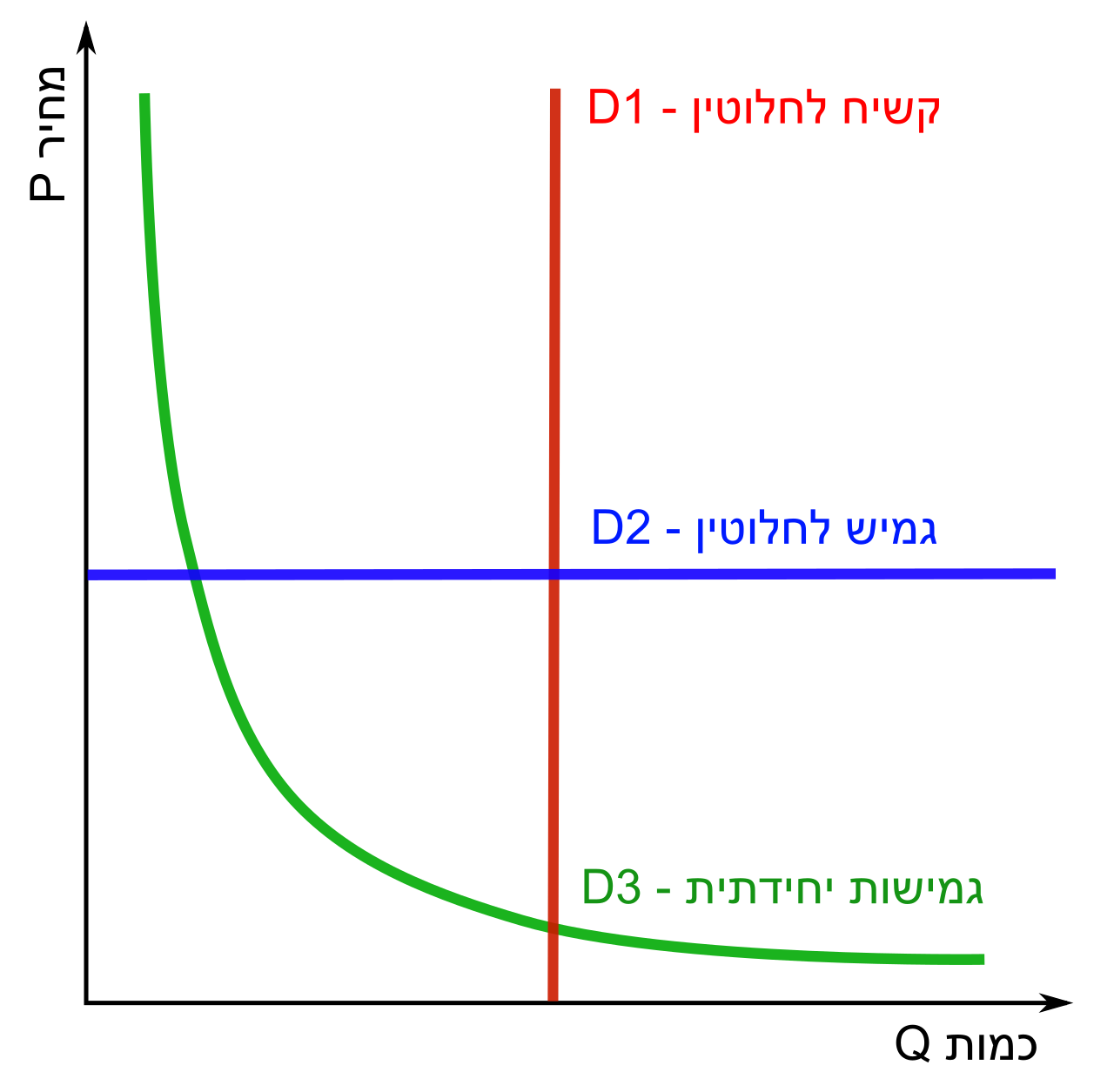
Elasticity is a unitless ratio, independent of the types of quantities being varied. An elastic variable (absolute value greater than 1) responds more than proportionally to changes; a unit elastic variable (absolute value equal to 1) responds proportionally; an inelastic variable (absolute value less than 1) responds less than proportionally. A variable can have different elasticity values at different starting points—for example, supply might be elastic at low prices but inelastic at higher prices. In empirical work, elasticity is often estimated as a coefficient in a linear regression where both dependent and independent variables are in natural logs, simplifying data analysis. The concept appears in many indicators, including price elasticity of demand, price elasticity of supply, income elasticity of demand, cross-price elasticity of demand, and elasticity of substitution.
Did You Know?
- If the price elasticity of demand is −2, a 10% increase in price causes quantity demanded to fall by 20%.
- Elasticity can be quantified as the ratio of the percentage change in one variable to the percentage change in another causative variable.
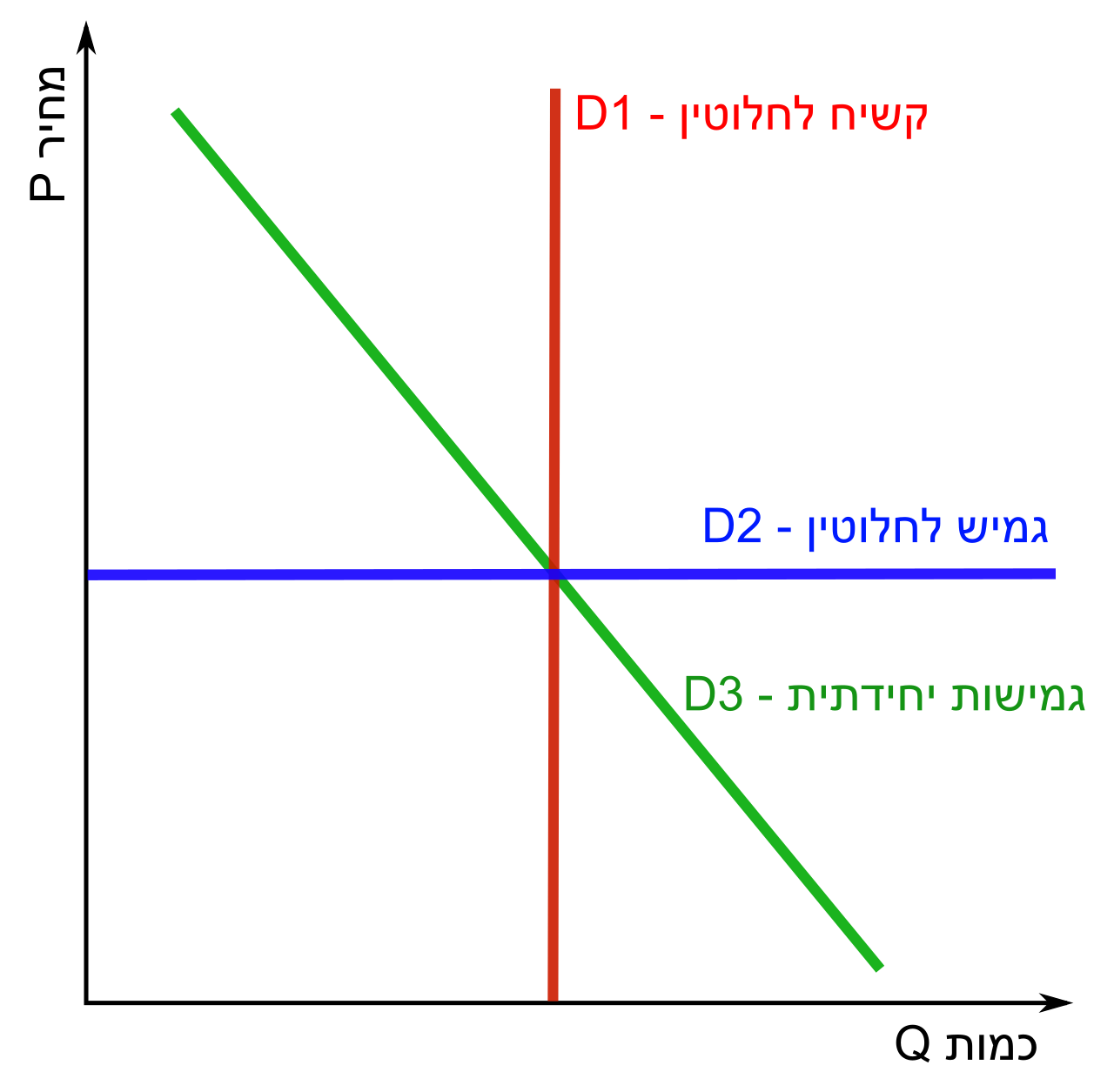
- When the tangent of a demand or supply curve is steeper, the price elasticity is smaller; when flatter, the elasticity is higher.
- Perfectly elastic demand or supply has an elasticity approaching infinity, while perfectly inelastic has an elasticity of zero.
Origins and Historical Development
The concept of elasticity in economics traces its roots to Alfred Marshall's 1890 publication Principles of Economics, where the idea appeared in an informal, qualitative form. For decades the notion remained largely theoretical until the late 1960s, when Joshua Levy and Trevor Pollock undertook a major empirical study examining the price elasticity of both supply and demand for products across the United States. This work helped transform elasticity from a conceptual abstraction into a measurable, data-driven instrument. Marshall's original framing laid the groundwork for what would become a cornerstone of neoclassical economic theory, enabling economists to quantify how buyers and sellers adjust their behavior in response to price movements. The progression from Marshall's informal citation to Levy and Pollock's rigorous empirical investigation illustrates how a single analytical idea can evolve from a qualitative observation into a precise quantitative tool over the span of nearly eight decades.
Mathematical Foundation and Classification
At its core, elasticity is defined as the ratio of the percentage change in one variable to the percentage change in another causally related variable, holding all other conditions constant. Formally, the elasticity of x with respect to y equals the fractional change in x divided by the fractional change in y. When changes become infinitesimally small, this expression simplifies to the partial derivative of x with respect to y, multiplied by y over x. Because it is constructed from percentage changes, elasticity is a unitless ratio, independent of the particular units used to measure the quantities involved. A variable whose absolute elasticity exceeds one is classified as elastic, responding more than proportionally to shifts in the driving variable. When the absolute value equals one, the response is exactly proportional, termed unit elastic. Below one, the variable is inelastic, changing less than proportionally. Crucially, a single variable can exhibit different elasticity values at different starting points, meaning the same good might be elastic at low prices yet inelastic at higher ones.
Applications Across Economic Theory
Elasticity permeates virtually every branch of economic analysis. Within neoclassical theory, it serves as a key mechanism for understanding the incidence of indirect taxation, marginal concepts in firm theory, the distribution of wealth, and the classification of goods in consumer choice theory. It is equally vital when discussing welfare distribution, particularly in calculating consumer surplus, producer surplus, and government surplus. The concept manifests in numerous distinct indicators: price elasticity of demand, price elasticity of supply, income elasticity of demand, elasticity of substitution between factors of production, cross-price elasticity of demand, and elasticity of intertemporal substitution. In microeconomics, elasticity and slope are intimately connected; analyzing the linear slope of a demand or supply curve, or the tangent at a particular point, reveals the elasticity at that location. A steeper tangent corresponds to smaller elasticity, while a flatter one indicates higher elasticity, giving analysts a geometric lens through which to interpret responsiveness.
Empirical Measurement and Practical Interpretation
In empirical research, elasticity takes on a particularly elegant form: it is estimated as the coefficient in a linear regression where both the dependent and independent variables are expressed in natural logarithms. This log-log specification is what makes elasticity so popular among empiricists, since the resulting coefficient is independent of units, greatly simplifying data analysis across different markets, currencies, and scales. A practical illustration helps clarify the concept: if the price elasticity of demand for a good is negative two, then a ten percent increase in price will cause the quantity demanded to fall by twenty percent. This straightforward interpretation allows policymakers and business strategists to forecast behavioral responses without needing to track specific units. Whether analyzing how suppliers adjust output at different price levels or how consumers shift between substitutes, the elasticity framework provides a universal language for measuring economic responsiveness.
Gallery


Frequently Asked Questions
Who is Elasticity (economics)?
Elasticity is a foundational measurement tool in neoclassical economics that quantifies how strongly one variable reacts when another shifts. It was first formally articulated by Alfred Marshall in his 1890 work *Principles of Economics*.
What are Elasticity (economics)'s powers/role?
Its core ability is calculating the ratio between the percentage change in a target variable and the percentage change in its driving cause, with all other factors held steady. This lets economists model everything from tax incidence to consumer choice and firm behavior.
How does Elasticity (economics)'s story end?
Rather than having a single conclusion, Elasticity remains an active, ongoing framework woven into virtually every branch of neoclassical analysis. It continues to underpin discussions of wealth distribution, indirect taxation, and the theory of the firm to this day.
Why is Elasticity (economics) important?
It gives economists a standardized, numerical way to compare how sensitive different markets and agents are to shocks, making it indispensable for policy design and theoretical modeling. Without it, assessing the real-world impact of price changes or tax shifts would lack a common quantitative language.
What is Elasticity (economics)'s origin story?
The concept entered formal economic discourse through Alfred Marshall's *Principles of Economics*, published in 1890, where he laid out the idea of measuring proportional responsiveness between variables. It has since become a cornerstone of the neoclassical toolkit.
More in Economic Concepts & Models 25-28
Elsewhere in the Economic Concepts & Models universe
Spotted an error? Know more?
This is a living reference — every entry is fact-audited, and reader corrections feed straight into our audit queue. Suggest an edit · See this site's audit record