
Comparative advantage
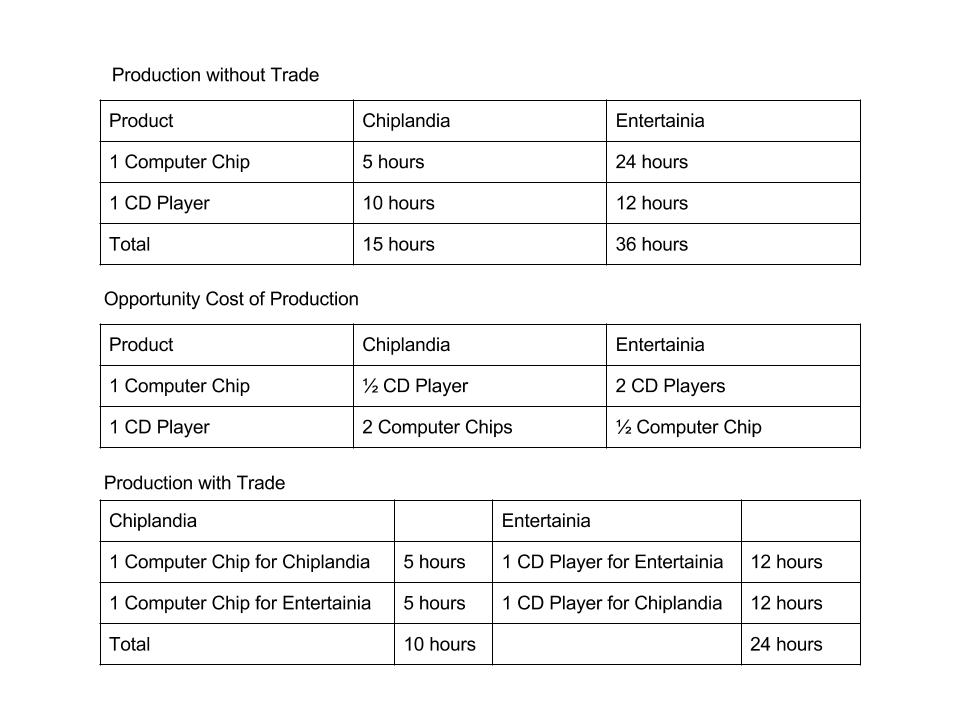
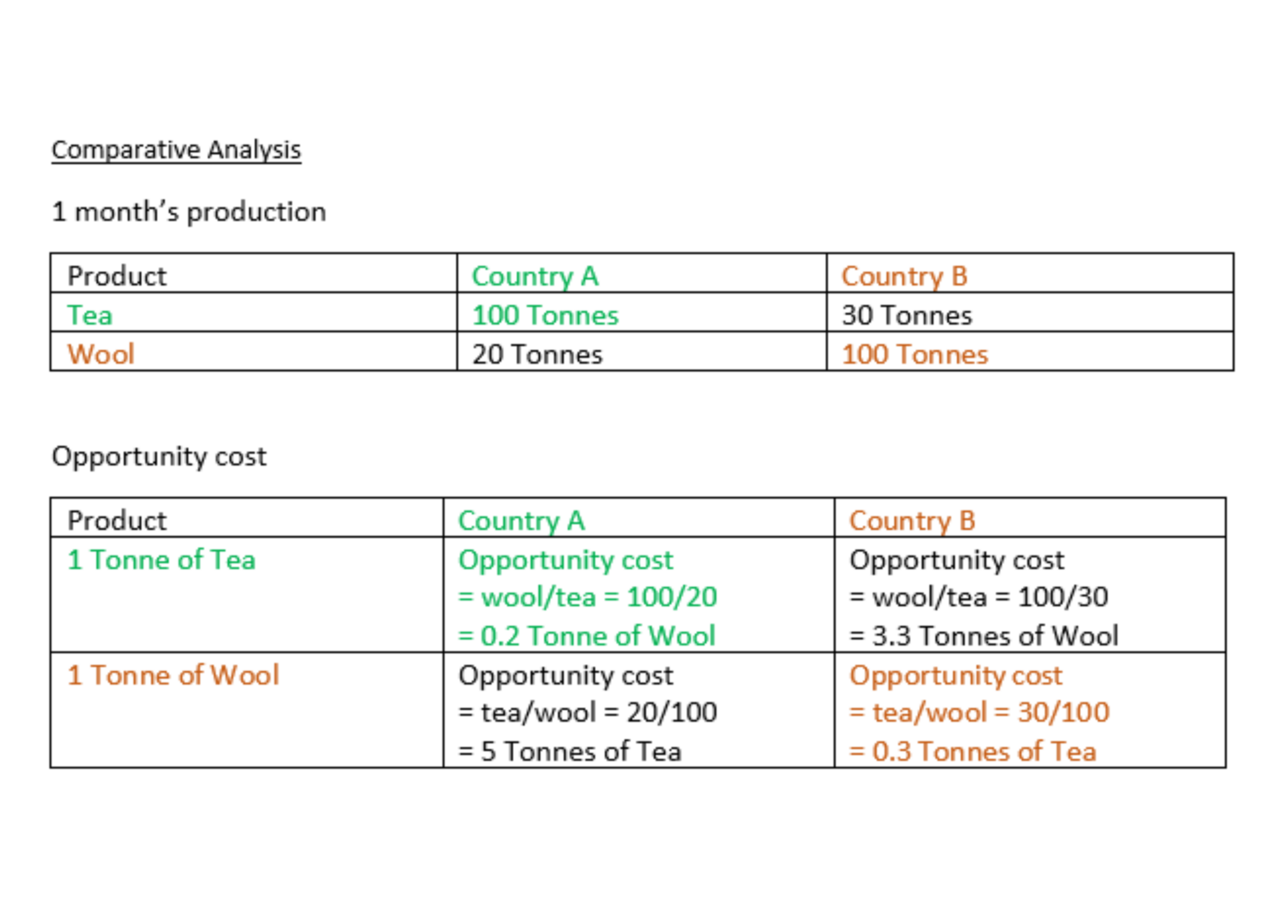
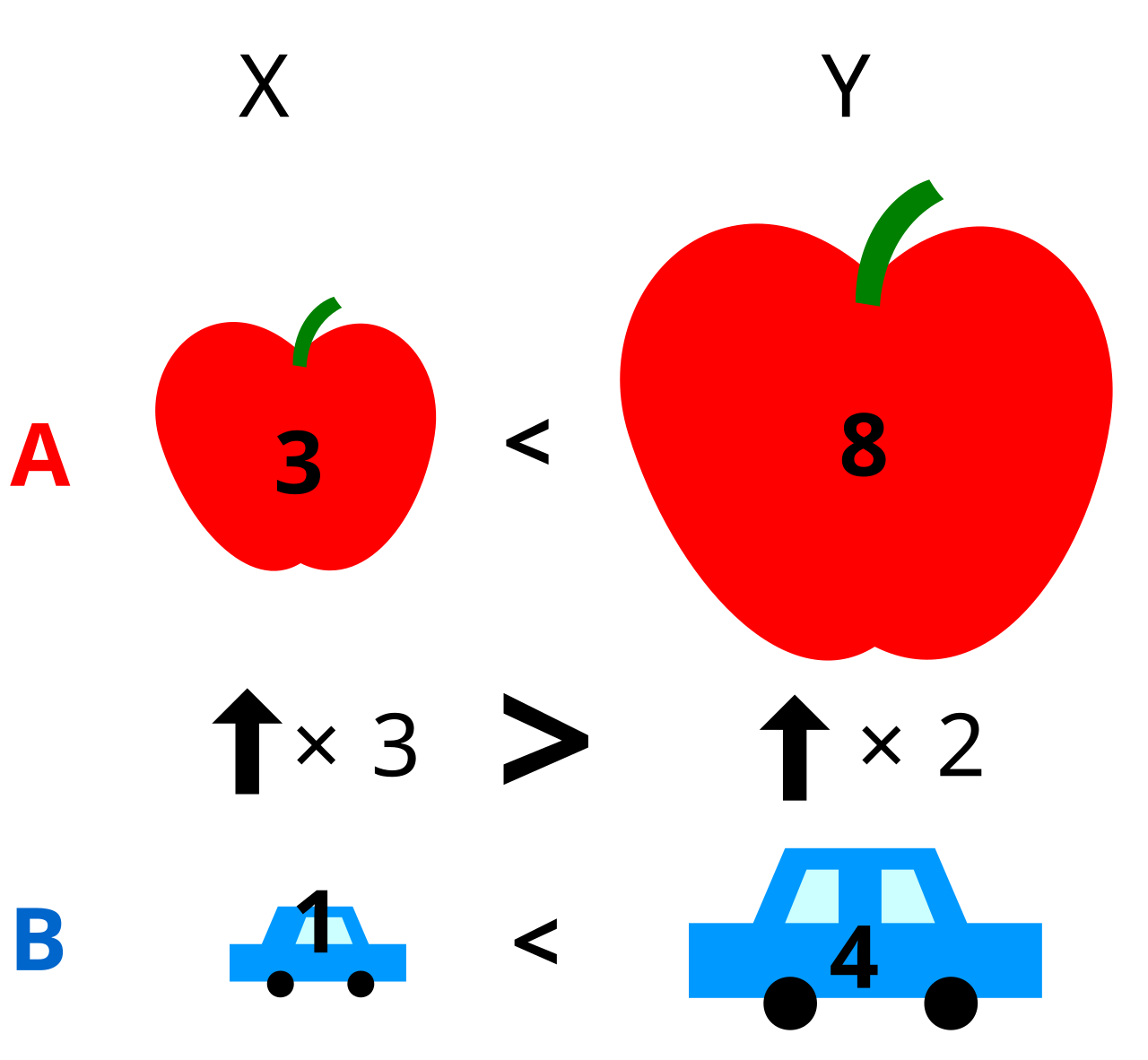
Comparative advantage explains trade gains from differing opportunity costs.

狩野大 · CC BY-SA 3.0
Comparative advantage is a concept in economics that describes the welfare improvement from allocating labor and resources among available opportunities, particularly in the context of trade. It is distinct from absolute advantage and competitive advantage, and is widely regarded as a powerful yet counter-intuitive insight explaining much of international trade.
- first_use
- 1815
- early_formulator
- Robert Torrens
- classical_developer
- David Ricardo
- key_work
- On the Principles of Political Economy and Taxation (1817)
- field
- Economics
- concept_type
- Trade theory
Lore & Background
Ricardo's famous example considered two countries, Portugal and England, producing wine and cloth. Portugal had an absolute advantage in both goods, but England had a comparative advantage in cloth due to lower opportunity cost. Ricardo demonstrated that if each country specializes in the good for which it has a comparative advantage and trades, both can consume more than in autarky. The Ricardian model, first mathematically formulated by William Whewell in 1833, shows trade patterns depend on productivity differences.
Reader's Guide
The concept of comparative advantage is central to classical trade theory. It shows that even if one country is more efficient in producing all goods, both countries can gain from trade by specializing according to comparative advantage. This insight, developed by David Ricardo in 1817, remains a foundational principle in economics. The Ricardian model, tested by G. D. A. MacDougall in 1951 and 1952, assumes labor is mobile domestically but not internationally. Comparative advantage is distinct from absolute advantage, which Adam Smith alluded to in 1776. The theory implies that relative productivity differences, not absolute efficiency, drive trade patterns. It has been widely influential in shaping trade policy and economic thought.
Did You Know?
- A very early use of the term 'comparative advantage' appears in Robert Torrens' 1815 work An Essay on the External Corn Trade.
- David Ricardo developed the classical theory of comparative advantage in 1817 in On the Principles of Political Economy and Taxation.
- The first mathematical Ricardian model was published by William Whewell in 1833.
- The earliest test of the Ricardian model was performed by G. D. A. MacDougall, published in The Economic Journal of 1951 and 1952.
Intellectual Lineage: From Smith to Torrens
The idea that nations benefit from exchanging goods did not arrive fully formed. Adam Smith, in his 1776 treatise The Wealth of Nations, laid the groundwork by arguing that a country should import any commodity it can obtain more cheaply from abroad than it could produce domestically, redirecting its own industry toward activities where it holds a relative edge. Two decades later, Robert Torrens sharpened the language. In an 1808 passage, he defined the gain from trade as the surplus of imported lace over what domestic labor and capital could have produced at the same cost. An anonymous 1814 pamphlet on foreign corn imports offered what is now recognized as the earliest recorded articulation of comparative advantage as a distinct concept. Torrens, acknowledging that pamphlet's priority, published his Essay on the External Corn Trade in 1815, where the term appears in one of its earliest recorded uses. This slow crystallization—from Smith's absolute advantage to Torrens' opportunity-cost framing—set the stage for Ricardo's definitive 1817 formulation.
Ricardo's Portugal-England Illustration
Ricardo's now-famous numerical example remains the clearest window into the logic of comparative advantage. He imagines two nations, Portugal and England, each producing wine and cloth of identical quality. Portugal is the a priori superior producer: 100 labor hours yield 10/9 units of cloth or 10/8 units of wine, whereas England's 100 hours produce only 1 unit of cloth or 5/6 units of wine. Portugal thus holds an absolute advantage in both goods. Yet the relative costs diverge. England's opportunity cost of producing cloth is lower than Portugal's, giving England a comparative advantage in cloth, while Portugal's relative efficiency tilts toward wine. Without trade, England needs 220 hours to produce and consume one unit each of both goods; Portugal needs 170. Under specialization, England devotes those 220 hours entirely to cloth, yielding 2.2 units, while Portugal's 170 hours produce 2.125 units of wine. By exchanging one unit of English cloth for between 5/6 and 9/8 units of Portuguese wine, both nations end up consuming at least one unit of each good, with surplus cloth up to 0.2 units and surplus wine up to 0.125 units remaining in each country.
From Verbal Theory to Mathematical Model
Ricardo first sketched the single-commodity version of his trade logic in his Essay on Profits and then expanded it to a multi-commodity framework in On the Principles of Political Economy and Taxation (1817). Yet the theory remained largely verbal and illustrative for nearly two decades. William Whewell, in 1833, published what is credited as the first fully mathematical Ricardian model, translating Ricardo's qualitative reasoning into formal general-equilibrium structure. The model's central prediction is that trade patterns are driven by differences in labor productivity across countries, under the standing assumption that capital and labor do not migrate internationally. The first empirical test of this framework came much later: G. D. A. MacDougall published his analysis in The Economic Journal across 1951 and 1952, attempting to verify whether real-world trade flows matched the model's predictions. This trajectory—from Smith's prose, through Torrens' definitions, to Ricardo's numerical example, to Whewell's equations, and finally to MacDougall's statistical verification—illustrates how a single economic insight can take well over a century to be fully formalized and then subjected to empirical scrutiny.
Distinctions, Assumptions, and the Limits of Specialization
Comparative advantage is frequently conflated with absolute advantage or with the separate concept of competitive advantage, yet the three are analytically distinct. Absolute advantage asks which producer is more efficient overall; comparative advantage asks which good carries the lower opportunity cost for a given producer. Ricardo's entire point is that even a nation with an absolute disadvantage in every commodity can still gain from trade, provided relative productivities differ. The theory rests on a critical assumption: capital and labor are immobile across borders. Ricardo believed this to be generally true, and it is precisely this immobility that prevents the more productive country from simply absorbing all production. Another subtle but important point, noted in the broader definition, is that optimal resource allocation need not mean extreme specialization in a single activity. The welfare gain from trade arises from re-allocation across available opportunities, and when that re-allocation occurs, market prices typically shift. The insight remains one of the most powerful and counter-intuitive in all of economics: mutual gain is possible even when one party is unambiguously less productive across the board.
Gallery

Frequently Asked Questions
Who is Comparative advantage?
It is a trade-theory concept first articulated by Robert Torrens in 1815 and then formally developed by David Ricardo in his 1817 treatise On the Principles of Political Economy and Taxation. It sits at the heart of classical economics and international trade analysis.
What is Comparative advantage's core power or role?
It shows that two parties can both gain from trade whenever their opportunity costs differ, even if one party is strictly more productive in every task. The key driver is relative sacrifice, not raw output.
How does Comparative advantage differ from Absolute advantage?
Absolute advantage asks which side produces more of a good, while comparative advantage asks which side gives up less to make it. That distinction is what makes mutually beneficial trade possible even between very unequal economies.
Why is Comparative advantage considered so important?
It is widely regarded as one of the most powerful yet counter-intuitive insights in all of economics, providing the theoretical backbone for much of international trade and specialization. Without it, the case for free trade would lose its most rigorous justification.
How does Comparative advantage's story end?
It remains a foundational pillar of trade theory and continues to underpin modern arguments for cross-border specialization and open markets. Its core logic—gains from differing opportunity costs—still anchors policy debates more than two centuries after Ricardo formalized it.
More in Economic Concepts & Models 1-24
Elsewhere in the Economic Concepts & Models universe
Spotted an error? Know more?
This is a living reference — every entry is fact-audited, and reader corrections feed straight into our audit queue. Suggest an edit · See this site's audit record